From April to September 2025, EASE completed an ambitious European mobility programme to promote the European Social Charter for Sport Events (ESCSE) and to disseminate the Recommendations for an inclusive sport workplace, key deliverable from our BeST Inclusion project. Over six months EASE visited 15 EU countries, meeting national and local stakeholders, sharing practical tools and collecting concrete feedback to adapt both the Charter and our recommendations to local realities.
Why this tour mattered?
The ESCSE and the BeST Inclusion recommendations are tools designed to anchor social responsibility, decent working conditions and inclusion at the heart of sport event organisation across Europe. But a charter only becomes meaningful when it is understood, discussed and adapted by the people who run events on the ground. That is why EASE chose a mobility format: to bring the Charter to stakeholders in their national contexts, gather real-world examples and jointly translate high-level commitments into implementable practices.
Summary of the mobility project:
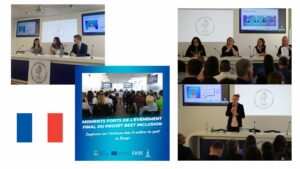
EASE launched the mobility project at the final conference of the BeST Inclusion project, held at the CNOSF (Comité National Olympique et Sportif Français), where we presented the BeST recommendations alongside the Alice Milliat Association. This was an ideal starting point to share our tools with French stakeholders and to link national practice with European perspectives.
Adriatic tour – Slovenia & Croatia (April)
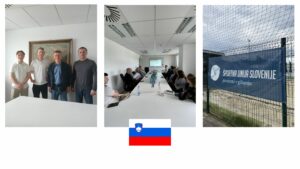
Ljubljana (Slovenia) marked our first stop. A multi-stakeholder workshop gathered federations, event organisers and practitioners to debate how the Charter can be applied across event types, from grassroots runs to international competitions, and how to adapt its language to local needs. An Italian journalist covered the workshop, broadening its regional reach.
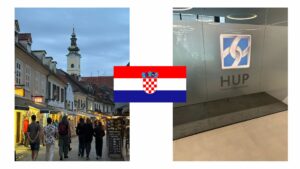
In Zagreb (Croatia), our meetings with the Croatian Employers’ Association (HUP) focused on how to strengthen the representativeness of sports employers in Croatia and on translating EASE’s resources into Croatian to increase accessibility.
Baltic tour – Latvia, Estonia, Finland (May)
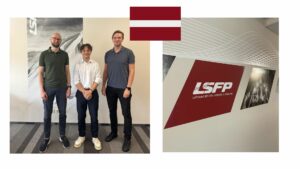
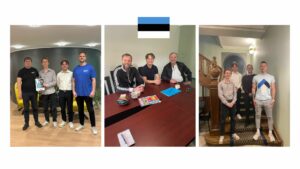
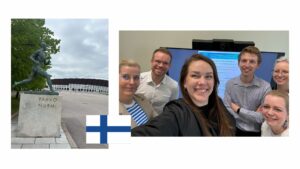
In Riga (Latvia) we met the Latvian Sports Federations Council to explore collaboration pathways. In Tallinn we engaged with the Ministry of Culture, the Tallinn European Sports 2025 team and the Tallinn Sports Clubs Federation to identify pilot sites for Charter implementation. Helsinki was our last stop for this tour, EASE presented both the ESCSE and BeST recommendations at the Finnish Olympic Committee where participants proposed translating our flyers into Finnish to widen outreach. We then translated these deliverable in all EU languages.
Danubian tour – Czech Republic, Hungary, Slovakia, Austria (June–July)
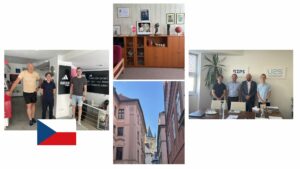
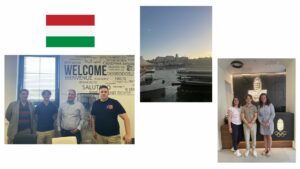
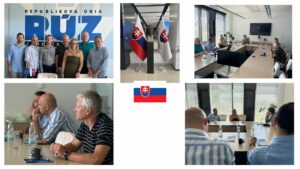
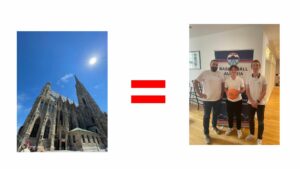
In Prague we exchanged with the Czech Association of Employers (UZS), RunCzech and the Czech Sport Union about scaling up social responsibility in mass events. Budapest discussions with the Magyar Olimpiai Bizottság and MGYOSZ highlighted synergies between sport governance, employer organisations and national employment policies. Bratislava saw productive exchanges with the National Union of Employers and the Slovak Olympic Committee, and Austria offered valuable insights via Basketball Austria on how national federations can champion the Charter.
Germanic tour – Belgium, Luxembourg, Germany (September)
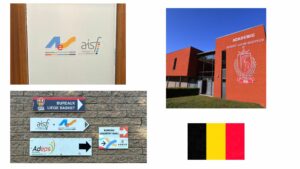
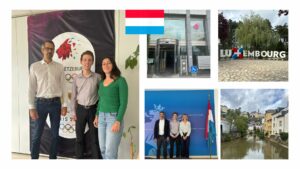
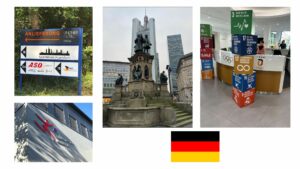
In Liège we presented advocacy work to Walloon stakeholders, strengthening francophone ties in Belgium. Luxembourg meetings with COSL and the Ministry showed promising pathways to professionalisation. Finaly, in Germany, initial contacts with the DOSB in Frankfurt raised the structural challenge of regionalised governance (Länder), suggesting a step-by-step, decentralised approach for future engagement.
Portugal & Bulgaria (September)
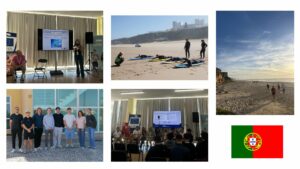
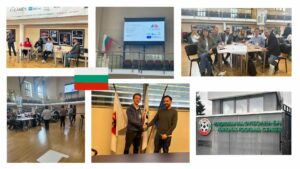
Sport Evolution Alliance hosted EASE at Employment@Sport week in Torres Vedras, Portugal, where we shared youth employability insights, the ESCSE and the BeST recommendations. The tour concluded in Bulgaria (Varna & Sofia) where EASE participated in the Centenary Games conference and discussed dual careers, professionalisation and social dialogue with the Bulgarian Football Union.
What are the outcomes and next steps?
During this ambitious mobility project, new contacts and potential EASE members were identified, strengthening EASE’s pan-European network. We are committed to expanding our representation of employers in the sports sector. We therefore intend to strengthen the ties we have forged abroad in order to continue working with the many organizations we have encountered and to continue building European social dialogue.
Concerning the Charter, workshops and case studies produced practical suggestions to refine guidance, making it easier to apply in small events and large-scale competitions alike. Also, our recommendations for inclusive workplaces sparked interest, especially on recruitment practices and accessible training pathways.
We would like to warmly thank every organisation that hosted us, engaged in discussions and shared local practices, their input has been essential to build a genuine European social dialogue in sport. EASE now moves into the consolidation phase: translating feedback into updated tools and supporting their implementations in as many countries as possible. Also, EASE continues to actively disseminate these materials.
To consult the European Social Charter for Sport Events (ESCSE) and the BeST Inclusion Recommendations (Recommendations for an Inclusive Sport Workplace) referenced during our tour, you can download the document here: