The BeST Inclusion project aims at achieving a more inclusive and diverse workforce within the sport sector, around 3 main axes: gender, age and disability. This project intends to strengthen their employability by supporting sport employers and giving them all the keys to hire these different categories of workers without fear.
The main objectives of BeST Inclusion are to:
– Assess the barriers to a more inclusive workforce for the sport sector in terms of gender, age, and disability,
– Identify the existing best practices in terms of policy for a more inclusive workforce for the sport sector,
– Address the inclusiveness of the sport workforce with policy recommendations in line with the economic reality of the sport sector,
– Produce the tools to act concretely for a more inclusive workforce for the sport sector.
BeST Inclusion allows us to address the topic of good governance in sport at European level by approaching the theme of social inclusion in the sport field and by enhancing exchanges between European sport actors.
BeST Inclusion (Better Sport Through Inclusion) was a 36-month Erasmus+ co-funded initiative to foster a more inclusive and diverse workforce in the European sport sector across three dimensions: gender, age and disability.
BeST Inclusion was initiated as a follow-up of the ESSA-Sport project, led by EOSE between 2016 and 2019. This project was meant to analyse the labour market and improve the supply of skills to the sector. Part of the ESSA-Sport project conclusions were the necessity to work on the inclusiveness of the workforce of the sport sector in Europe, especially when it comes to gender equality. After the Covid-19 crisis, figures show that the employment of women and young people decreased (there is no statistical analysis regarding the employment of disabled people). More than any other, the category of young women particularly suffered from this crisis. As a result of this willingness to promote the inclusiveness of the sport sector, representatives of the Finnish Paralympic Committee also presented on this first day an inclusiveness charter, to ensure that the project meetings are accessible to all, thanks to a list of recommendations that will help organizers to be inclusive in any of their meetings.
With a consortium of 11 organisations from 9 countries, the project:
-
analysed barriers to inclusive employment in sport (three analytical studies),
-
identified and compiled good practices (one European guide),
-
and produced policy recommendations tailored to sport employers.
Consortium:
-
EASE – European Association of Sport Employers (Coordinator)
-
EOSE – European Observatoire of Sport and Employment
-
Alice Milliat Association (France)
-
ENGSO Youth (Europe)
-
Finnish Paralympic Committee (Finland)
-
University of Murcia (Spain)
-
University of Cassino and Southern Lazio (Italy)
-
UNESCO Chair – Munster Technological University (Ireland)
-
WOS – Werkgeversorganisatie in de Sport (Netherlands)
-
Arbetsgivaralliansen (Sweden)
-
Sportwerk Vlaanderen (Belgium)
The project combined research, stakeholder roundtables (European & national), and employer-led co-creation to deliver practical, ready-to-use tools for sport organisations. It contributed to good governance and social dialogue in sport by equipping employers with evidence-based approaches to inclusive recruitment and employment.
To meet these objectives, the project has been divided into 3 phases.
- The first phase was to analyse the barriers to employment for the three identified categories of workers, thanks to the organisation of 3 European roundtables. These online roundtables will be completed with some analytic data about the employment in the sport sector, in order to produce studies about the barriers to employment for young people, women and people with disabilities.
- After the publication of these three studies, each partner of the project organised a national roundtable to identify and analyse the best practices regarding inclusiveness and employment in their countries. This helped understand the reasons why and the means by which it could be disseminated, from the examples of countries where the workforce is the most inclusive. A guide of best practices for the inclusiveness and diversity of the sport workforce has been produced as a conclusion of these roundtables.
- Finally, based on the work established in the previous phases, the sport employers presented recommendations for a more inclusive workforce, after a series of online meetings. Their participation ensured that these recommendations are directly addressed to the stakeholders of the sport sector, to reduce the barriers to employment and encourage a more inclusive workforce.
Dissemination and visibility were at the heart of the BeST Inclusion project. Given its ambition to foster a more inclusive workforce in the European sport sector, the consortium recognised from the outset that the results would only be meaningful if they were widely shared, accessible, and actively taken up by employers, institutions, and civil society stakeholders. Over three years, the project implemented a comprehensive dissemination strategy that combined digital tools, publications, events, media outreach, and partner networks, ensuring that the project’s impact extended well beyond the consortium itself.
Transnational Project Meetings of BeST Inclusion (2022–2025)
Over its three years of implementation, the BeST Inclusion project relied on a series of Transnational Project Meetings (TPMs) to ensure strong coordination, alignment of tasks, and collective ownership of results. These meetings were not only administrative milestones, but also key opportunities for partners to exchange experiences, validate outputs, and strengthen collaboration. Held in different countries across Europe, they reflected the truly European nature of the project and allowed the consortium to stay connected, efficient, and responsive to challenges.
1. Kick-off Meeting – Paris, France (June 2022)
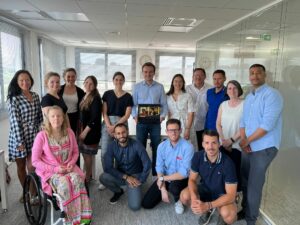
The project officially started with its kick-off meeting in Paris, hosted by EASE, the coordinator. This first gathering brought together all partners to establish a common understanding of the project’s vision, structure, and expected outcomes. The discussions focused on clarifying roles and responsibilities, agreeing on the methodology for the three thematic studies (gender, age, disability), and setting up the communication and dissemination plan. Importantly, the meeting fostered a spirit of cooperation and trust, which would prove essential throughout the project. It also underlined the commitment of all partners to deliver a meaningful contribution to inclusion in the European sport sector.
2. Second TPM – Murcia, Spain (September 2023)
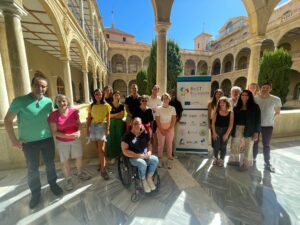
The second transnational project meeting took place in Murcia, Spain, hosted by the University of Murcia. This meeting came at a critical moment, as the first round of European online roundtables had been completed and initial findings were emerging. Partners reviewed the progress of the thematic studies and discussed the methodological challenges linked to collecting comparable data across different national contexts.
The Murcia meeting also had a strong dissemination component: partners visited the facilities of the University of Murcia and engaged with local stakeholders, illustrating how the project connected research to practice. The TPM allowed partners to agree on the next steps for the Guide of Best Practices, ensuring that national realities would be represented and that outputs would be both rigorous and applicable for sport employers.
3. Third TPM – Utrecht, Netherlands (June 2023)
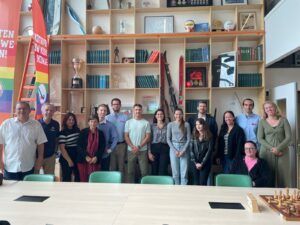
The third meeting of the consortium was held in Utrecht, the Netherlands, hosted by WOS. At this stage, the project had moved from analysis to synthesis: the three thematic studies were nearing completion, and partners worked intensively on drafting the European Guide of Best Practices for Inclusion in Sport Employment. The Utrecht TPM was thus highly operational, with working sessions dedicated to consolidating case studies, agreeing on structure, and finalising the guidelines to be included.
The meeting also included a review of dissemination activities and strategies to maximise visibility. Partners shared experiences of national roundtables and identified opportunities to scale up communication efforts. The TPM confirmed that the project was on track and highlighted the added value of employer organisations in bringing credibility and practical focus to the outputs.
4. Fourth TPM – Paris, France (December 2024)
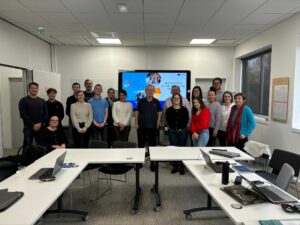
The final transnational project meeting was held in Paris, once again hosted by EASE, in connection with the Final Conference of BeST Inclusion. This meeting was particularly symbolic, as it allowed partners to reflect on three years of collaboration, evaluate achievements, and prepare the sustainability phase. The focus was on consolidating the Policy Recommendations and ensuring that they would be disseminated widely after the project’s official end.
Partners also discussed how to maintain the momentum generated by the project, embedding its outputs into their regular activities and continuing to advocate for inclusive employment in sport. The Paris TPM closed with a strong sense of pride and commitment: the consortium had delivered high-quality outputs, built stronger networks, and laid the foundation for future cooperation.
The four transnational project meetings of BeST Inclusion marked the backbone of the project’s governance and collaboration. Each gathering had its specific role: launching and structuring the work in Paris, reviewing progress and engaging with stakeholders in Murcia, consolidating outputs in Utrecht, and celebrating achievements and planning sustainability in Paris again. Together, they illustrate the evolution of a European partnership that remained cohesive, ambitious, and impactful throughout the project lifecycle.
Overall, the work performed under BeST Inclusion kept pace with its objectives. By the end of the project, the consortium had produced robust evidence on inclusion gaps, formulated concrete best practices and policy guidelines, and initiated a cross-sector dialogue on inclusive workforce development in sport. Any initially identified objectives were achieved on schedule; notably, the three thematic studies and the best practices guide were delivered by 2023-2024 as planned, forming the basis for the final recommendations. The collaborative approach and phased methodology proved effective, ensuring that each step (research → best practices → recommendations → dissemination) built on the previous one. In summary, BeST Inclusion successfully progressed from analysis to action, yielding tangible outputs and setting the stage for lasting impact on the sport sector’s inclusiveness.
Key results (downloads)
-
European Guide on Best Practices for Inclusion in Sport Employment (PDF)
-
Policy Recommendations for an Inclusive Sport Workforce (PDF)
- Final Conference – Key Messages & Summary
If you want to learn more about this project, you can find more information here.
Coordinator’s contact details: christophegrognard@cosmos-sports.fr
Recommendations for an Inclusive Sport Workplace
Why Inclusive Sport Workplaces Matter: The Need for [...]
BeST Inclusion: Shaping a More Inclusive Future for the European Sport Workforce
On April 1st, 2025, the final conference of [...]
BeST Inclusion Project – Transnational Partner Meeting #4
On December 2nd and 3rd, the EASE premises [...]
Funded by the European Union. Views and opinions expressed are however those of the author(s) only and do not necessarily reflect those of the European Union or the European Education and Culture Executive Agency (EACEA). Neither the European Union nor EACEA can be held responsible for them.